Access Clean Energy From Your Living Room
Join America's #1 community solar network and reduce your electricity bills without installing a single panel

Why Arcadia Leads the Community Solar Revolution
Since launching in 2014 from Washington, D.C., Arcadia has transformed how Americans access renewable energy. Their technology platform removes traditional barriers??"no roof installations, no equipment purchases, no homeownership requirements.
Whether you're renting an apartment or own a home with a shaded roof, Arcadia connects you to nearby solar farms and credits your existing utility bill. It's clean energy made simple.
Arcadia By The Numbers
Recent Milestone Achievement
In January 2024, Arcadia became the first community solar provider to manage over 2 gigawatts of capacity nationwide. Just two months later, they announced a strategic merger with Perch Energy that will expand their reach to more than 3 gigawatts across 16 states.
This growth reflects surging demand for accessible clean energy solutions that work for renters, homeowners, and businesses alike.
Understanding Community Solar
Community solar represents a breakthrough in renewable energy access. Instead of each household installing individual rooftop panels, multiple subscribers share the output from a centralized solar farm.
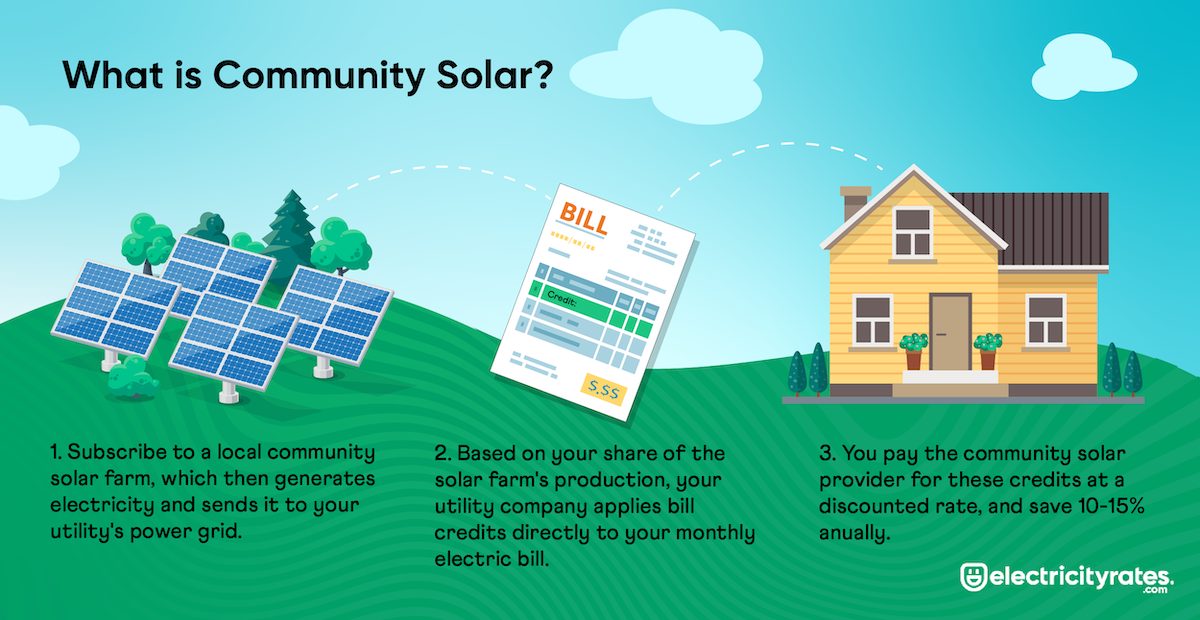
Here's what makes this model revolutionary: the solar farm sits somewhere in your local utility service area??"perhaps on a warehouse roof, open farmland, or a parking lot canopy. When those panels generate electricity, it flows directly into the shared power grid.
You don't physically receive that electricity at your property. Instead, your utility company tracks the solar farm's production and applies credits to your regular bill based on your subscription share. Think of it like a community garden??"everyone tends a shared plot and receives their portion of the harvest.
The Evolution of Community Solar
The first community solar projects appeared in 2006, but the concept remained niche for years. Today, it's the fastest-growing segment of the solar industry, driven by state policies that mandate renewable energy access and federal incentives like the Inflation Reduction Act.
This growth benefits everyone: property owners earn steady income from hosting solar farms, subscribers save money on electricity, and communities accelerate their transition away from fossil fuels.
Your Path to Community Solar With Arcadia
Arcadia has streamlined what was once a complicated enrollment process. Here's how they make it effortless:
- Verify your location's eligibility
Check whether community solar operates in your utility territory by entering your ZIP code. Arcadia serves customers across Colorado, Delaware, Illinois, Maine, Maryland, Massachusetts, Minnesota, New Jersey, New Mexico, New York, Rhode Island, Virginia, Oregon, and Washington D.C. - Connect your utility account
Arcadia links directly to your existing electric utility account through secure data integration. This allows them to analyze your typical monthly usage patterns and determine the optimal subscription size. - Get matched to a local solar farm
Based on your location and energy consumption profile, Arcadia assigns you a share of a nearby solar installation. You're supporting renewable energy in your own community. - Receive automatic bill credits
Each month, as your portion of the solar farm generates electricity, your utility company applies production credits to your bill. Arcadia structures subscriptions so these credits exceed your subscription cost, creating net savings. - Monitor your impact
Track your energy savings and environmental impact through Arcadia's online dashboard. Watch your carbon footprint shrink while your electricity costs decrease.
What Makes This Beneficial?
- Renters gain access to solar savings previously available only to homeowners
- Condo residents and those with shaded or unsuitable roofs can participate
- Your existing utility provider continues delivering power??"nothing changes except your lower bill
- No installation crews, no rooftop equipment, no maintenance responsibilities
- Subscription fees are designed to be less than the credits you receive, ensuring positive cash flow
Where Arcadia Operates
Following their merger with Perch Energy, Arcadia now manages community solar projects across 16 states. Their footprint continues expanding as state legislatures pass laws enabling community solar development.
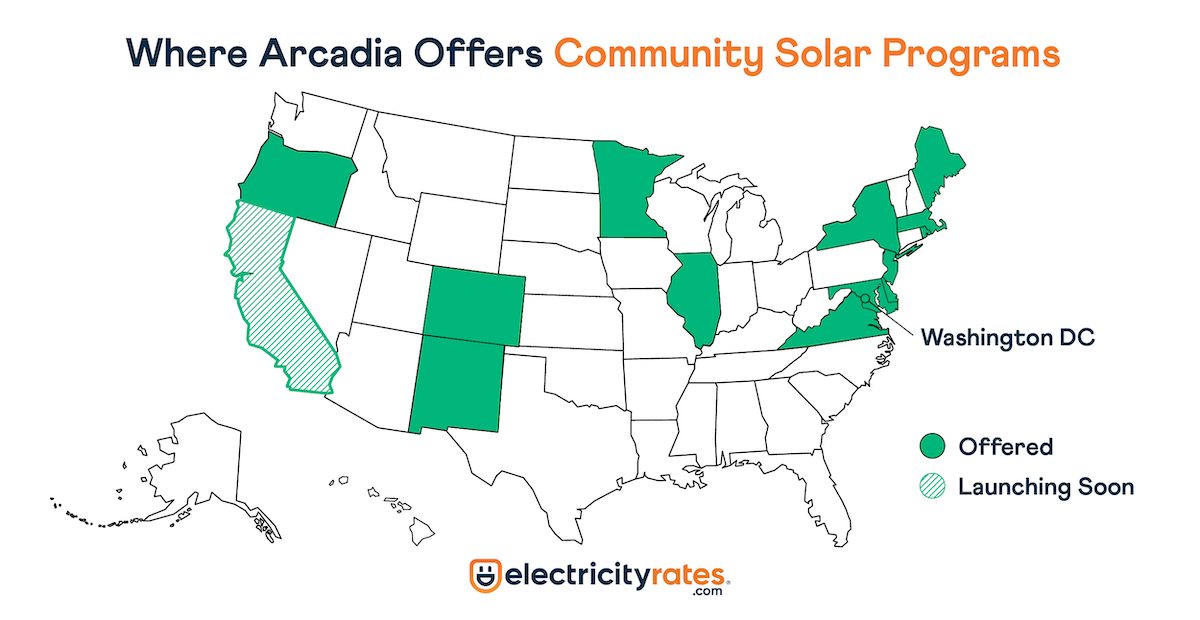
Current service areas include: Colorado, Delaware, District of Columbia, Illinois, Maine, Maryland, Massachusetts, Minnesota, New Jersey, New Mexico, New York, Oregon, Rhode Island, and Virginia. California expansion is underway.
If your state isn't listed yet, monitor for updates. As renewable energy mandates spread and community solar legislation advances, new markets open regularly. States like Texas, Florida, and Pennsylvania are exploring or implementing community solar frameworks.
Making Sense of Community Solar Billing
Understanding your savings requires knowing how the billing mechanics work. Here's the complete picture:
The Credit Structure
When you subscribe through Arcadia, you're purchasing a share of a solar farm's monthly output. As that farm generates electricity, your utility company issues credits on your regular bill reflecting your subscription's production.
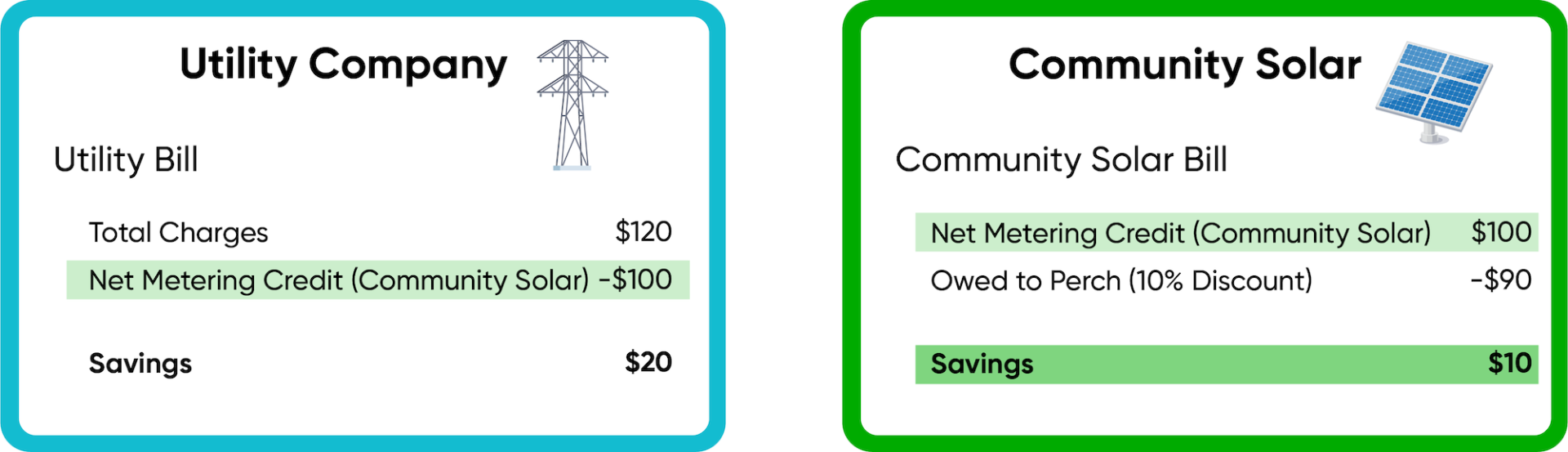
Arcadia then charges you for your subscription??"typically around 90% of the credit value you received. This difference creates your savings. For example:
Month 1: April
Your utility bill shows a $100 solar production credit based on your share of the farm's output that month. Your regular electricity charges apply as normal, but this $100 credit reduces your total amount due.
Month 2: June
Arcadia bills you $90 for the subscription (90% of the $100 credit). They forward this payment to the solar farm owner. Your net savings: $10, plus you've supported clean energy generation.
Savings Variability
Discount rates fluctuate by market and program structure. Independent analyses have documented savings ranging from 5% to 15% off the supply portion of electricity bills, with 10% being common in established markets like Illinois.
Several factors influence your actual savings:
- State-specific community solar regulations and utility credit rates
- Seasonal variation in solar production (summer typically generates more)
- Your household's overall electricity consumption patterns
- Competition among community solar providers in your area
Flexibility and Portability
Life circumstances change, and Arcadia accommodates that reality. If you move within the same utility service area, your subscription typically transfers to your new address. Moving to a different region? You can cancel without penalty fees and explore community solar options in your new location.
What Sets Arcadia Apart
Universal Accessibility
Homeownership isn't required. Apartment renters, condo residents, and anyone lacking suitable roof space can participate equally. Arcadia has democratized solar access.
Zero Upfront Investment
No installation costs, no equipment purchases, no enrollment fees, no termination penalties. You can start and stop based on your needs without financial risk.
Hands-Off Management
Arcadia handles all behind-the-scenes logistics??"solar farm maintenance, utility coordination, billing reconciliation, regulatory compliance. You simply enjoy the savings.
Institutional Scale and Stability
With gigawatt-scale capacity under management and backing from major energy industry players, Arcadia brings the reliability and longevity critical for long-term energy planning.
Verified Environmental Impact
Your participation directly supports renewable energy deployment. Arcadia's 2 GW milestone prevents over 2 billion pounds of coal combustion annually??"measurable climate action.
Certified B Corporation
Arcadia maintains B Corp certification, meeting rigorous standards for social and environmental performance, accountability, and transparency. Profit serves purpose.
The Climate Impact of Your Subscription
Choosing community solar transcends personal bill savings??"you're participating in the energy transition that will define this century.
Measurable Carbon Reduction
When Arcadia's managed solar farms generate electricity, they displace fossil fuel generation that would otherwise occur. Every kilowatt-hour produced by solar panels means one less kilowatt-hour from natural gas plants or coal facilities.
At their current 2 gigawatt capacity level, Arcadia's network prevents the equivalent of 2 billion pounds of coal from being burned each year. That's approximately 900,000 metric tons of CO? emissions avoided annually??"comparable to taking nearly 200,000 cars off the road.
Accelerating Infrastructure Development
Subscriber revenue provides the financial foundation for new solar farm construction. According to Arcadia's State of Community Solar report, federal incentives from the Inflation Reduction Act have supercharged project development, but customer demand ultimately determines deployment pace.
Each new subscription demonstrates market viability, encouraging developers to build additional capacity. Your participation helps justify the next solar farm in your region.
Economic Benefits Beyond Energy
Community solar creates local economic activity: construction jobs during installation, ongoing maintenance employment, property tax revenue for municipalities, and lease payments to landowners hosting facilities.
Unlike fossil fuel plants that require continuous fuel purchasing from distant suppliers, solar farms generate revenue that circulates within local economies. Your subscription dollars support your community's economic development.
Equity and Access
Traditional rooftop solar has primarily benefited affluent homeowners who can afford upfront costs and qualify for financing. Community solar extends renewable energy access to low-income households, renters, and underserved communities??"advancing energy equity alongside decarbonization.
How We Evaluate Arcadia
UtilityRates.com assesses energy providers across four critical dimensions. Here's Arcadia's performance breakdown:
Product Quality
Industry-leading 2+ GW community solar capacity, comprehensive utility data platform, enterprise energy management solutions across carbon reduction, cost optimization, and reliability.
Customer Support
Intuitive user dashboard, responsive support team accessible via chat, phone, and email, proactive communication about solar credits and billing.
Track Record
Certified B Corporation with 200,000+ active subscriptions, decade of operation since 2014, demonstrated commitment to equitable clean energy access.
Customer Feedback
Better Business Bureau accreditation, consistent growth trajectory indicating customer satisfaction, minor complaints typical of rapidly scaling service providers.
Get Started With Arcadia
www.arcadia.com
(866) 526-0083
Submit a request
login.arcadia.com